Wednesday, January 11, 2012

Goldline AQ-TROL-RJ AquaTrol Above-Ground Pool Return Jet Chlorinator

!±8± Goldline AQ-TROL-RJ AquaTrol Above-Ground Pool Return Jet Chlorinator

Brand : Goldline | Rate : | Price : $425.95
Post Date : Jan 11, 2012 03:43:00 | Usually ships in 24 hours


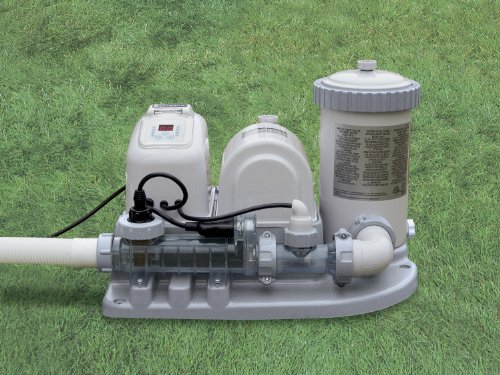
The Aqua Trol Electronic Chlorine Generator (also known as a salt chlorinator) is designed specifically for above ground pools up to 18,000 gallons. The Aqua Trol has all the same functions and features of the Aqua Rite but with a lower chlorine output. The Aqua Trol also has an integral time clock for control of the pool filtration pump. Since many above ground pools already have a single electrical outlet for the filter pump, the Aqua Trol is designed with an outlet (timer controlled) for the filter pump to plug into, the Aqua Trol then plugs into the original outlet the filter pump was using. The savings on chlorine and electrical power alone (if the pump was previously running 24 hours), will have the Aqua Trol paying for itself in just a few short years. The Aqua Trol system typically installs in less than 30 minutes and is very easy to operate. No more mixing, measuring and messing around with liquid or tablet chlorine again. Now you can automatically turn ordinary salt into a self-regenerating supply of pure chlorine for both pool and spa water that's clean, clear and luxuriously soft. Electronic chlorination has become the simple, safe and affordable alternative to using harsh, chemically-produced chlorine to sanitize pools and spas. Unlike traditional chlorine treatments that require a regular routine of monitoring and replacing chlorine, electronic chlorination produces chlorine from common table salt. The key is our patented Turbo Cell?, a specially designed converter connected to the control unit. As water passes through the Turbo Cell, an extremely safe electrical charge turns the salt previously added to the water into fresh sanitizing chlorine which is then dispensed evenly throughout the pool. Just a teaspoon of salt per gallon is all it takes. Installation is quick, easy and suitable for any new or existing pool.

More Specification..!!

Low Cost Steinway Piano Upright Flexsteel Furniture Free Shipping

Sunday, January 1, 2012

The Many Different Pros and Cons of Pool Chlorinators and What to Look For

!±8± The Many Different Pros and Cons of Pool Chlorinators and What to Look For

Salt Pool Chlorinators are a straightforward means to feature the needed chlorine automatically to your pool and they're put in inline after the plumbing for a filter system. Salt is needed to be added to your pool in proper concentrations, ( between 2,500 to 4000 ppm) and it passes through your chlorinator cell making free chlorine, and at the identical time destroys the used chlorine. Below are a number of the pros and cons of owning this sort of system.

Pros are:

Salt Pool Chlorinators produce the chlorine needed to sanitize the pool. So you don't have to add any additional. The exceptions to this rule will be when you close up your pool at the end of the season.

The pool water typically feels softer at the touch. Many of our customers have told us this. Also it appears to not dry out the skin as badly as historically chlorinated pools. Another benefit of this type of system as it does not impact up your eyes as badly also

Pools maintained with Salt Pool Chlorinators many times require less water chemistry testing. The salt water naturally creates the sanitizing chlorine that keeps your water clean, however the rest of the water chemistry parameters should still be maintained. These types of systems permit extended periods of your time to cater for a vacations or business visits, as a result less intervals of maintenance required. The chlorine is automatically created.

Cons will be:

When it reaches time to shut your pool, you'll have to use regular chlorine. Salt Pool Chlorinators stop producing below certain temperatures. One would think that algae cannot grow at these temperatures, but you still need to feature some type of sanitizer before you button up you pool.

Generally the characteristics of salt-water pools exhibit higher pH levels than traditionally chlorinated ones. So you will have to add further muriatic acid to combat that.

One might continually think that having a salt-water pool is more economical. The only real cost reduction is the reduction of chlorine costs. What you will have is salt and muriatic acid costs. So from the cost perspective you are really dealing at only a break even point considering the actual cost and installation of the pool chlorinator.

Most times the sales trick is to mention that a salt-water pool is maintenance free, however is really is not. Debris always still needs to be cleaned, water chemistry checked and filters cleaned.

Weighing in all factors, I think the biggest or best purpose of a salt-water pool is a smaller intervals of maintenance. In the nutshell I think we all wish to pay the least amount of detail caring for our pool, and more time enjoying it.


The Many Different Pros and Cons of Pool Chlorinators and What to Look For

Simmons Check Plush Sectional Discounted Lowest Price Thomasville Lighting

Saturday, December 17, 2011

Dealing With & Treating Swimming Pool Algae, Mustard Algae, Black Algae, Algaecide & Green Alga

!±8± Dealing With & Treating Swimming Pool Algae, Mustard Algae, Black Algae, Algaecide & Green Alga

Algae is a common problem in swimming pools. What is it; what are the different types & how is it successfully prevented and treated. First of all, algae is a single-celled plant form. Some are aquatic (live in water), some are not. Algae utilizes the process of photosynthesis to manufacture its own food. Algae comes in very wide variety of colors and forms making it adaptable to almost any condition. Although some forms are virulent - especially Black or Mustard algae -, most are harmless and pose no more than a nuisance to most pool owners. Due to algae's microscopic size, it takes literally millions of these plants to accumulate to be noticed by the naked eye! By that time it may be too late and very costly to correct. Prevention of algae blooms is the best solution.

Green Algae: The most common form of algae that we deal with in swimming pools is "green" algae. Green algae (varies in color from blue-green to yellow-green to dark-green) can be free floating in the water (turning the water a hazy-green) or can be wall-clinging (patches of green). Wall-clinging varieties range in severity from small patches on pool walls and bottoms to virtually covering the entire pool surface. Green algae has the ability to clog filters and may even cause surface damage if left untreated. Green algae can be treated fairly simply and quickly with a proper, aggressive shocking & algaecide.

A relative of regular green algae is "small-celled green algae" (SCGA). The difference is seen in these areas: 1. The water remains relatively clear. Many treat the problem (without proper analysis) as a copper or mineral problem, however the metal chelants will show no effect. 2. When treating with chlorine, chlorine seems to "disappear". SCGA is very resistant to even high levels of chlorine.

Other mid-summer types of green algae noticed is "green spots" all around the pool, especially in shady areas. The water is almost always "very clear". The water can have a "stinging" sensation. This is normal green algae, typically brought about by lack of homeowner care; i.e. not following a weekly maintenance routine such as the Once-a-Week 3 Step program combined with very low pH and very low Total Alkalinity.

Treatment: Have water properly analyzed. BALANCE THE POOL WATER. Pools treated with chlorine or bromine should aggressively shock with chlorine (BioGuard Burn Out® or Smart Shock®) and use a good quality algaecide such as Back Up®, Algae All 60®, or Banish® in extreme cases. Pools treated with SoftSwim or other Biguanides should top up their Bactericide level "B", add a double dose of algaecide "A", and add a double dosage of shock or "C". Follow up either method with Optimizer Plus® (a borate product similar to ProTeam Supreme). Treating algae with Sodium Bromide should be discouraged (sodium bromide treatments, can, in time, cause a chlorine demand problem).

"Black Algae" (actually blue-green algae) forms in cracks and crevices on pool surfaces, especially plaster finishes. We normally find black algae growing in, but not limited to, shady areas of the pool. Black algae is more typically found in concrete or plaster finished pools; it is very uncommon to find it in vinyl liner pools. It is known for a heavy slime layer and "skeletal growths" that make it impervious to normal chlorine levels. When viewed in a swimming pool, the water remains relatively clear, however, almost all customers notice a high chlorine demand (use much more chlorine than normal). When brushed, "black algae" will be difficult to budge and even though it seems as if it has been removed, the black algae will most likely return to the exact same spots within 24 hours.

What we're beginning to understand is that Black Algae is "aided" by swimming pool bio-films. As bio-films accumulate on pool surfaces, they act as a kind of "breeding bed" providing nutrients and a "soft" place to set down roots. Removal of the bio-film dramatically aids in the long term treatment of Black algae. The more that the bio-film is removed and continually removed, the less likely Black Algae will be able to set down.

Treatment: Have water properly analyzed. BALANCE THE POOL WATER. Prior to and during treatment, the algae MUST be thoroughly brushed in order to "break open" the slime layer that covers and protects the Black Algae cell. During treatment, the chlorine level MUST be maintained in excess of 3.0 ppm - this may require daily shocking of the pool - AND the affected areas MUST be thoroughly brushed 2 to 3 times per day to allow the chlorine treatment to penetrate the algae. TRUE Black Algae is very resistant to treatment and can be transferred from pool to pool via bathing suits and pool toys. Failure to do these critical steps will prevent the treatment from working. Pools treated with chlorine or bromine should aggressively shock with chlorine (Burn Out® or Smart Shock®) and use a good quality algaecide such as Back Up®, Algae All 60®, or Banish® in extreme cases. Pools treated with SoftSwim or other Biguanides should top up their Bactericide level "B", add a double dose of algaecide "A", and add a double dosage of shock or "C". Follow up either method with Optimizer Plus®. Treating algae with Sodium Bromide should be discouraged as mentioned above.

"Mustard Algae" is probably the MOST misdiagnosed form of algae. Mustard algae is a chlorine-resistant form of green algae (yellow-green to brown in color) typically found in sunbelt areas. It often resembles dirt or sand on the bottom or sides of a pool. In our market area (Fairfield county CT), the number of TRUE Mustard Algae cases that we treat can be counted on ONE HAND in most seasons. Mustard Algae is prevalent in Sunbelt areas. Mustard Algae has certain characteristics: It can be brushed away very easily, but returns quickly to the same location.

Keep in mind that the "algae" may be returning to the same place due to a dead spot in the pool. Be sure that you have good circulation through out the entire pool.

Although it usually creates a large Chlorine demand, it has been known to survive in high levels of Chlorine - over 3.0 ppm. It is extremely important to remove mustard algae growth from equipment (including the back of underwater lights & ladders) and bathing suits to avoid cross or recontamination of other pools. Pool equipment can be left in the pool during product application or cleaned separately with a mild cleaning solution. Rinse thoroughly if equipment is used in a SoftSwim® pool. Bathing suits should be washed with detergent as directed on garment label.

Treatment: Have water properly analyzed. BALANCE THE POOL WATER. Prior to and during treatment, the algae MUST be thoroughly brushed in order to "break open" the slime layer - such as with Black Algae. Failure to do this critical step will prevent the treatment from working. Pools treated with chlorine or bromine should aggressively shock with chlorine shocks such as BioGuard Burn Out® or Smart Shock® and use a good quality algaecide such as Back Up®, Algae All 60®, or Banish® in extreme cases. Pools treated with SoftSwim or other Biguanides should top up their Bactericide level "B", add a double dose of algaecide "A", and add a double dosage of shock or "C". Follow up either method with Optimizer Plus®. Treating algae with Sodium Bromide should be discouraged as mentioned above. Click here for all Algae treating products.

The best way to prevent and control algae is to maintain good pool care. Good pool care means following the 5 Keys to pool care (look for our published articles on theses subjects): 1. Have and maintain good circulation of the water to all parts of the pool. 2. Filter the pool a minimum 8 to 12 hours daily. 3. Clean the pool regularly by vacuuming and brushing all surfaces. 4. Test the Water at least 2 times each week. Testing tells you what is going on with the water. Make adjustments immediately when necessary. 5. Maintain good Water Chemistry. Chlorine or other sanitizer in their correct ranges, pH 7.4 - 7.6, Total Alkalinity 100 - 150 ppm, Calcium Hardness 200 - 300 ppm. On a weekly basis (every week all season long): Shock the pool with the appropriate shock treatment and add a maintenance dose of a good quality algaecide (please don't use the gallon jug algaecide - they're mainly colored water).


Dealing With & Treating Swimming Pool Algae, Mustard Algae, Black Algae, Algaecide & Green Alga

Philips Dvd Player Dvp642 Grand Sale

Wednesday, December 14, 2011

Intex Krystal Clear Saltwater System and Filter Pump

!±8± Intex Krystal Clear Saltwater System and Filter Pump


Rate : | Price : $269.00 | Post Date : Dec 14, 2011 12:42:26
Usually ships in 24 hours

New for 2010! A two-stage process uses copper ionization to disinfect ions while converting salt to natural chlorine, creating an aggressive biocide to attack pool algae better than any product on the market. Touch-sensitive control panel allows user to pre-program operating hours - 24 hour auto clockFlow sensor system alerts operator to adverse operating conditions. Keypad locking system ensures settings are not changed accidentally.Easy to use test strips (50 count) included to check performance and maintain the perfect level of salinity in your above ground swimming pool.Easy set-up video included.What is saline conversion chlorination? - Saline chlorination is a term used for the process of converting the salt dissolved in water into active liquid chlorine, known as hypochlorite, for the sanitization of swimming pool & spa waterHow does saline conversion chlorination work? - A specific quantity of pure, non-iodized, fine grain table salt is added to the pool water to create a saltwater (saline) concentration of 0.3% (3000 parts per million). This salinity concentration is slightly less than the salinity level found in most human tears, thus it is very gentle to the swimmer's eyes and skin. Liquid chlorine (hypochlorite) is created through a process called electrolysis. As the water pump passes the saline through the chlorinator cell a low voltage DC current is applied to the saline. This applied energy current changes the salt dissolved in the water into liquid chlorine (hypochlorite). The liquid chlorine immediately mixes with the water leaving the chlorinator cell and flows into the swimming pool as clean, chlorinated water.The continuous introduction of liquid chlorine will ensure the continuous sanitization of the pool's water and will not allow the growth of algae. When the liquid chlorine has destroyed the bacteria in the pool, it reverts to salt.

Sandstone Coasters Right Now Tumbler Composters Ideas

Thursday, December 1, 2011

Residential Properties for Sale - 1845 Tudor Rd, North Palm

**UPDATED 3BR/2BA/2CG POOL/SPA HOME WITH SPLIT FLOOR PLAN LOCATED IN DESIRABLE JUNO ISLES** NEW ROOF IN 2003**REMODELED KITCHEN IN 2006 FEATURES GRANITE COUNTERS, WOOD CABINETS, PASS THROUGH TO PATIO, PANTRY AND RAISED CEILING**MASTER BEDROOM BATH AND GUEST BATH COMPLETELY REMODELED **WOOD FLOORS AND CROWN MOLDING THROUGHOUT**NEW AC AND DUCT WORK IN 2006**UPDATED ELECTRICAL THROUGHOUT** WATER FILTRATION SYSTEM FOR ENTIRE HOUSE**NEW WASHING MACHINE** ACCORDION HURRICANE SHUTTERS ON ALL WINDOWS** LARGE SCREEN ENCLOSURE WITH COVERED PATIO PERFECT FOR ENTERNTAINING** LARGE HEATED POOL (42' X 14') WITH A NEW SALT WATER CHLORINATOR AND A 10 PERSON HOT TUB **PRIVACY FENCE WITH LUSH LANDSCAPING**SEPTIC TANK REPLACED IN 2007 AND REPLACED DRAIN FIELD IN 2009**NEWER DRIVEWAY AND FRONT PATIO**BRAND NEW HURRICANE RATED GARAGE DOOR**THIS HOUSE IS A MUST SEE - DON'T MISS OUT - LOCATION -- LOCATION -- LOCATION --CLOSE TO THE BEACHES, RESTAURANTS, SHOPPES AND MORE ** Bedrooms: 3 Bathrooms: 2 Price: 5000 For more information about this property, please contact Jeff Wilcox at or JeffWilcox@keyes.com. Property Details: live.keyes.com MLS ID: R3223060

Soothie Bottles Order Now Futon Frame Queen Buy Shop Tecumseh Snow King Carburetor

Monday, October 10, 2011

Is Diving Safe In Private Pools?

!±8± Is Diving Safe In Private Pools?

Scuba diving is a sport fun and exciting as your adrenaline pumps. So if you're an adrenaline junkie, then dip is definitely something you should try. However, there are some rules you must follow the divers, as well as the types of permits for swimming pools, where you may have to do this water activity.

According to the U.S. Consumer Product Safety Commission, which result from diving accidents, most of the private swimming pool. Many areas of the United States has banned such activity inprivate pools as they are small and do not have enough space and depth to accommodate the person when he or she reaches to the bottom. Most of these incidents ended up in paralysis which resulted in the partial or total loss of use of the diver's torso and limbs. This is caused by any damage caused to the spinal cord or to the brain. For these reasons, diving on private pools is a big no-no.

However, if you're insistent on diving on your private pool, you should follow some of the basic and important rules that you should know about before you start with your diving sport.

Avoid diving into above ground pools as they are too shallow which can obviously injure any diver no matter how good and experienced he or she is in diving.

Never dive from the side of the diving board as it is dangerous. Jump on from the front so that you will also have a better view of where you are going to plunge.

Sliding head first is a bad idea as what was said earlier regarding the shallowness of private pools. You can always jump feet first and enjoy the thrill of it without risking yourself.

Dive with both of your hands in front of your head to easily maneuver yourself when you reach the water after you jump from the diving board.

In case there are other divers in your private pool, check the water first and see if he or she has come out of the water so that you can jump. You don't want to hit the other divers by jumping over them as this can result into serious water related accidents.

There should only be one diver on the diving board per dive to ensure the safety of all divers. It is better to follow this than to argue as there are no benefits when there are two people on the diving board.

Put the talking after you dive so that you can focus more on your diving. You're always prone to accidents when you're not focusing on what you are doing. So the best way to make sure that everything will be alright is to stay focus. You can always talk with the others later after you made your dive successfully.

You can do all of these safely if you just simply follow them as they can help a lot in ensuring not only your safety but as well as the others.


Is Diving Safe In Private Pools?

Lowest Price Kirkland Home Furnishings Frigidaire Gallery Dryer Clearance Sale Wagon Train Dog Treats Quickly


Sponsor Links